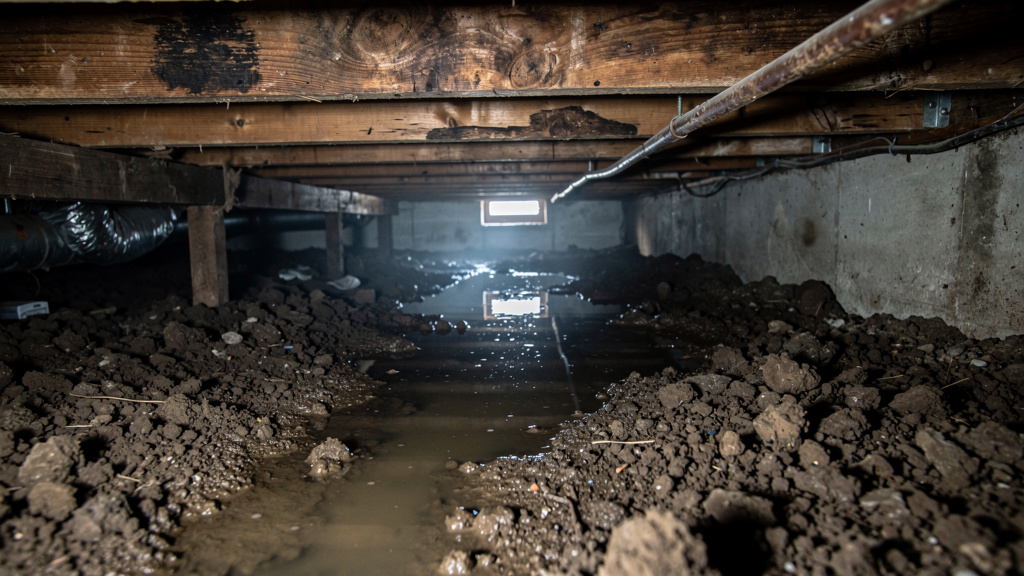
Charlotte homeowners face crawl space flooding risks during heavy spring rains due to poor drainage, high groundwater, and clay soil that doesn’t absorb water quickly.
Why Does Charlotte Get Crawl Space Flooding More Than Other Cities?
Charlotte’s unique geography creates perfect conditions for crawl space water problems. The city sits on dense Piedmont clay soil that becomes nearly waterproof when saturated.
During heavy spring rains, this clay soil can’t absorb water fast enough. Instead of soaking into the ground, rainwater pools around foundation walls and seeps through cracks or gaps. Charlotte receives about 43 inches of annual rainfall, with spring storms often dumping 2-4 inches in a single day.
The region’s rolling hills also create drainage challenges. Homes built on slopes or in low-lying areas face runoff from higher ground. Water flows downhill and collects around foundations, putting pressure on crawl space walls.
Many Charlotte homes built before 1990 have traditional vented crawl spaces without proper moisture barriers. These designs actually make flooding worse. During humid weather, warm air enters through foundation vents and condenses on cool surfaces, adding even more moisture to an already wet space.
Local building codes now require vapor barriers in new construction, but thousands of existing homes lack adequate protection. The combination of clay soil, heavy rainfall, and older construction methods creates a recipe for crawl space water problems throughout the Charlotte area.
What Are the Warning Signs of Crawl Space Water Damage?
Musty odors coming from floor vents or HVAC registers indicate moisture problems below your home. This smell often appears 24-48 hours after heavy rain.
Standing water is the most obvious sign, but many homeowners never check their crawl space. Other warning signs include increased humidity indoors, higher utility bills from HVAC systems working harder, and unexplained allergies or respiratory issues.
Check for water stains on crawl space walls, which appear as dark rings or discoloration. These marks show previous flooding levels. Efflorescence—white, chalky deposits on foundation walls—indicates water has evaporated and left mineral residue behind.
Wood damage develops gradually but becomes expensive quickly. Look for soft, spongy floor joists or subflooring. Sagging floors above the crawl space suggest structural damage from prolonged moisture exposure. Sister joists may be needed at $100-300 per repair.
Mold growth appears as black, green, or white patches on wooden surfaces. In Charlotte’s humid climate, mold can develop within 48-72 hours of flooding. Professional mold remediation costs $1,500-5,000 depending on the affected area.
Pest activity increases in wet crawl spaces. Termites, carpenter ants, and rodents are attracted to moisture and damaged wood. You might notice insect wings, droppings, or unusual sounds coming from below your floors.
How Can Charlotte Homeowners Prevent Crawl Space Flooding?
Proper grading directs water away from your foundation before it can cause problems. The ground should slope away from your home at least 6 inches over 10 feet.
Clean gutters and downspouts regularly, especially during Charlotte’s heavy spring rain season. Clogged gutters overflow and dump water directly against foundation walls. Extend downspouts at least 6 feet from the house to carry water away from the foundation.
Install a sump pump system in flood-prone areas. These pumps activate automatically when water levels rise, removing water before it can accumulate. A basic sump pump installation costs $500-1,500, much less than water damage repairs.
French drains provide permanent drainage solutions for chronic flooding problems. These interior channels collect groundwater and direct it to a sump pump. Professional installation typically costs $2,000-4,000 but prevents thousands in future damage.
Seal foundation cracks immediately. Even small cracks allow significant water penetration during heavy rains. Use hydraulic cement or polyurethane sealant for minor cracks. Larger structural issues require professional evaluation.
Consider crawl space encapsulation for comprehensive moisture control. This process seals the entire space with vapor barriers on floors and walls, plus installs a dehumidifier. Full encapsulation costs $5,000-15,000 but eliminates moisture problems permanently while improving indoor air quality.
What Should You Do Immediately After Crawl Space Flooding?
Turn off electricity to any outlets, lights, or HVAC equipment in the flooded crawl space to prevent electrical hazards and equipment damage.
Remove standing water as quickly as possible using a submersible pump or wet vacuum. The longer water sits, the more damage it causes to wooden structures and insulation. Most rental centers in Charlotte carry submersible pumps for $30-50 per day.
Document the damage with photos for insurance claims before cleaning begins. Take pictures of water levels, damaged materials, and any personal property stored in the crawl space. Most homeowner’s insurance policies cover sudden flooding but not gradual moisture problems.
Remove wet insulation immediately—it cannot be salvaged and becomes a breeding ground for mold. Bag and dispose of soaked fiberglass or cellulose insulation safely. Wet insulation also loses all thermal value and adds weight to floor joists.
Increase ventilation and dehumidification to dry the space quickly. Rent commercial fans and dehumidifiers to accelerate drying. The goal is to reduce humidity below 60% within 48 hours to prevent mold growth.
Contact your insurance company within 24-48 hours to report the damage. Many policies have strict timeframes for filing claims. Professional water damage restoration may be covered, potentially saving thousands in out-of-pocket expenses.
When Should Charlotte Homeowners Call Professionals?
Call professionals immediately if you discover more than 2 inches of standing water or if flooding affects structural elements like floor joists or support posts.
Electrical hazards require immediate professional attention. If water has reached electrical outlets, panels, or HVAC equipment, contact a licensed electrician before entering the space. Charlotte’s clay soil conducts electricity well when wet, increasing shock risks.
Mold growth covering more than 10 square feet requires professional remediation according to EPA guidelines. DIY cleaning becomes ineffective and potentially dangerous at this level. Professional mold remediation costs $1,500-5,000 but ensures safe, complete removal.
Structural damage like sagging floors, cracked foundation walls, or soft floor joists needs engineering evaluation. These problems worsen quickly and can compromise your home’s safety. Sister joist repairs cost $100-300 each when caught early but require complete floor replacement if ignored.
Recurring flooding problems need permanent solutions that most homeowners cannot install themselves. French drains, sump pump systems, and full encapsulation require specialized knowledge and equipment. Professional installation includes warranties and often pays for itself through prevented damage.
CrawlClear connects Charlotte homeowners with qualified crawl space professionals who understand local soil conditions and building challenges. Getting multiple estimates helps ensure fair pricing and appropriate solutions for your specific situation.
| Flooding Severity | DIY Actions | Professional Help Needed | Typical Cost Range |
|---|---|---|---|
| Surface moisture | Increase ventilation, run dehumidifier | None if resolved quickly | $50-200 (equipment rental) |
| 1-2 inches water | Pump out water, remove wet insulation | Electrical inspection if affected | $200-800 |
| 2+ inches water | Emergency water removal only | Full restoration, mold prevention | $1,500-5,000 |
| Structural damage | Document for insurance | Engineering evaluation, repairs | $3,000-15,000 |
| Recurring floods | Temporary fixes only | Permanent drainage solutions | $5,000-20,000 |
FAQ
Q: How quickly does mold grow in a flooded crawl space?
Mold can begin growing within 48-72 hours in Charlotte’s humid climate, especially on wet wood surfaces.
Q: Will homeowner’s insurance cover crawl space flooding damage?
Most policies cover sudden flooding but not gradual moisture damage or poor maintenance issues.
Q: Can I use a regular shop vacuum to remove crawl space water?
No, use only submersible pumps or wet vacuums rated for continuous water removal and electrical safety.
Q: Should I close crawl space vents during heavy rain?
Temporarily closing vents during storms can help, but permanent sealing requires proper encapsulation to prevent moisture buildup.
Q: How long does it take to dry out a flooded crawl space?
With proper equipment and ventilation, most crawl spaces dry within 3-7 days depending on flooding severity.