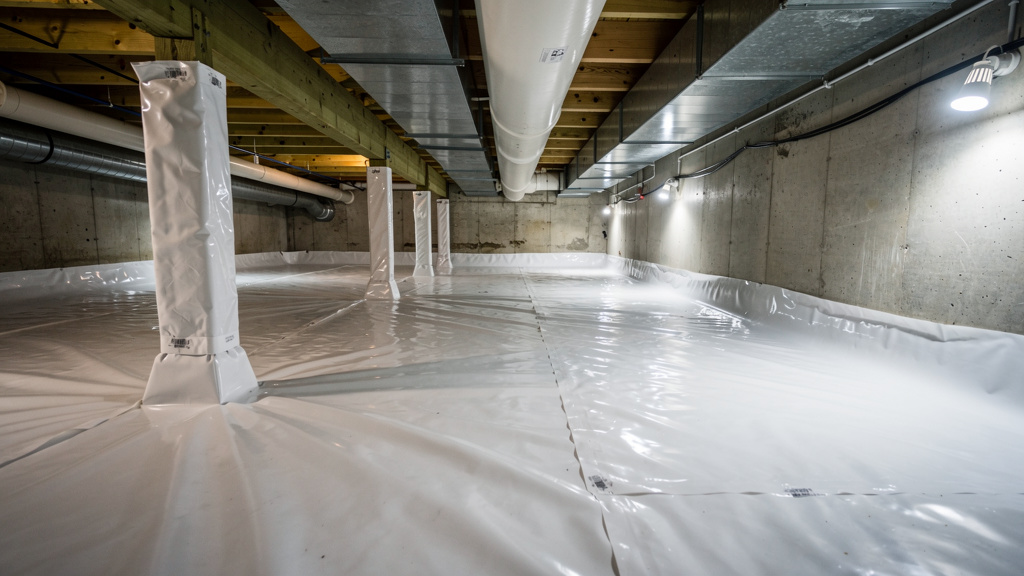
Crawl space dehumidifiers in Charlotte cost $1,100 to $2,800 installed, with professional-grade units ranging from $1,000 to $1,800 plus labor (Source: BAY Crawl Space & Foundation Repair).
Why Charlotte’s Climate Demands Proper Crawl Space Dehumidification
Charlotte’s humid subtropical climate creates challenging conditions for crawl space moisture control. The city’s outdoor humidity ranges from 45% in February to 61% in September, with hot summers that drive moisture into crawl spaces (Source: Dry Pro Foundation & Crawlspace Specialists). This high humidity makes homes feel warmer, forcing air conditioning systems to work harder and increasing utility bills (Source: Crawl Space Brothers).
Charlotte sits in the Piedmont region where heavy clay soil expands when wet and contracts when dry, creating foundation cracks that allow moisture entry (Source: Carolina Duct and Crawl). The combination of humid air and moisture-holding clay soil creates perfect breeding conditions for mold and mildew in crawl spaces. Most Charlotte homes were built with traditional vented crawl spaces, which actually worsen moisture problems by allowing humid outdoor air to enter and condense on cooler surfaces.
North Carolina building code now requires permanently installed dehumidifiers with minimum 15 pints per day capacity for closed crawl spaces, recognizing that mechanical moisture control is essential in this climate (Source: North Carolina Building Code). Proper dehumidification maintains crawl space humidity below 60% at all times, with 50-55% being optimal for preventing mold growth and protecting structural components.
What Affects Crawl Space Dehumidifier Costs in Charlotte?
Unit capacity and features determine the baseline cost, but installation complexity significantly impacts your total investment.
Professional-grade crawl space dehumidifiers cost between $1,000 and $1,800 for the equipment alone (Source: BAY Crawl Space & Foundation Repair). The Santa Fe Compact 2 costs $1,118.99, while higher-capacity models like the Advance90 cost $1,379.99 and Advance100 cost $1,798.99 (Source: BAY Crawl Space & Foundation Repair). Aprilaire units offer 5-year warranties and are considered superior technology, while Santa Fe provides 6-year warranties.
Installation labor typically adds $300 to $1,000 depending on electrical work needed and accessibility. Your crawl space may need dedicated electrical outlets, condensate drain lines, or modifications to accommodate the unit. Professional-grade units can handle up to 100 pints of water per day with automatic draining, but require proper condensate discharge to daylight or interior pump systems (Source: North Carolina Building Code).
Location within your crawl space affects installation costs. Units need adequate clearance for maintenance access and proper air circulation. Some installations require additional ductwork or drain extensions to reach appropriate discharge points.
How Do Different Dehumidifier Types Compare for Charlotte Crawl Spaces?
Standard residential dehumidifiers fail quickly in crawl space environments, while commercial-grade units are built for continuous operation in challenging conditions.
Basement-style dehumidifiers cost $200 to $500 but aren’t designed for crawl space conditions. They lack automatic restart features, proper drainage systems, and can’t handle the dust and temperature variations common in crawl spaces. These units typically fail within 1-2 years in Charlotte’s humid climate.
Commercial crawl space dehumidifiers cost more upfront but provide reliable long-term operation. They feature automatic restart after power outages, built-in condensate pumps, and robust construction designed for continuous operation. Professional units also include humidity controls that automatically adjust operation based on conditions, maintaining optimal levels without manual intervention.
Energy-efficient models specifically designed for crawl spaces use 30-40% less electricity than standard units while providing superior moisture removal. ENERGY STAR-rated units like AquaStop dehumidifiers reduce operating costs while meeting North Carolina’s efficiency requirements (Source: ENERGY STAR program certification guidelines).
What Installation Requirements Add to Your Project Cost?
Electrical work and proper drainage significantly impact installation costs beyond the equipment price.
North Carolina code requires electrical outlets for permanently installed dehumidifiers, which may require running new circuits to your crawl space (Source: North Carolina Building Code). Electrical work typically costs $200 to $600 depending on distance from your electrical panel and accessibility. Some installations need GFCI outlets for safety compliance.
Condensate drainage must discharge to daylight or connect to interior condensate pumps per state requirements. Simple gravity drain installations cost $100 to $300, while pump systems for drainage add $400 to $800. Your contractor must ensure proper slope and prevent drain line freezing during winter months.
Access modifications may be needed if your crawl space entrance is too small. North Carolina requires minimum 18-inch by 24-inch access openings, and some older Charlotte homes need enlargement (Source: Johnston County, North Carolina). Access modifications cost $300 to $800 depending on foundation type and required structural work.
When Should You Replace Rather Than Repair Your Existing Unit?
Age, efficiency, and repair frequency determine whether replacement makes financial sense compared to continued repairs.
| Factor | Repair | Replace |
|---|---|---|
| Unit Age | Under 5 years | Over 7 years |
| Repair Cost | Under $300 | Over $500 |
| Efficiency | ENERGY STAR rated | Pre-2015 model |
| Capacity | Meets current needs | Undersized for space |
| Warranty | Active coverage | Expired warranty |
| Operating Cost | Under $30/month | Over $50/month |
Units requiring frequent repairs or struggling to maintain proper humidity levels should be replaced. Charlotte’s demanding climate stresses dehumidifiers, and older units often can’t keep up with moisture loads during summer months. Replacement becomes cost-effective when annual repair costs exceed 50% of new equipment price.
Professional assessment helps determine whether performance issues stem from equipment failure or inadequate capacity. Some Charlotte crawl spaces need higher-capacity units than originally installed, especially after crawl space encapsulation increases the sealed area requiring dehumidification.
When to Call a Professional Instead of DIY Installation
Dehumidifier installation requires electrical work, drainage connections, and understanding of moisture dynamics that most homeowners lack.
Electrical connections must meet North Carolina code requirements and often need dedicated circuits. Improper wiring creates fire hazards and voids equipment warranties. Licensed electricians understand GFCI requirements, proper wire sizing, and safe installation practices for humid environments.
Drainage system design affects long-term performance and prevents water damage. Professionals understand proper slope requirements, condensate pump sizing, and discharge locations that comply with local codes. Poor drainage leads to standing water, system failures, and potential crawl space flooding issues during heavy rain periods.
Equipment sizing requires accurate moisture load calculations based on your specific crawl space conditions. Undersized units run constantly without achieving proper humidity control, while oversized units cycle frequently and don’t remove humidity effectively. Professional assessment ensures proper capacity selection for Charlotte’s climate conditions.
What Charlotte Homeowners Should Do Next
Start by having your crawl space humidity levels professionally measured to determine if you need dehumidification and what capacity is required.
Most reputable Charlotte contractors offer free crawl space inspections that include humidity testing and equipment recommendations. Get written quotes from at least three licensed contractors to compare equipment specifications, installation scope, and warranty coverage. Ask specifically about electrical work requirements, drainage solutions, and annual maintenance needs.
Schedule inspections during spring when humidity levels rise and moisture problems become visible. Don’t wait if you notice musty odors, condensation on surfaces, or visible mold growth. These signs indicate humidity levels above safe thresholds that worsen over time and require more extensive moisture control solutions if left untreated.
Consider timing installation with other crawl space improvements like vapor barrier replacement or encapsulation work to reduce overall project costs through combined labor and access setup.
FAQ
Q: How much electricity does a crawl space dehumidifier use monthly?
Professional units typically cost $25-$45 monthly to operate depending on capacity and usage.
Q: How often should I replace the dehumidifier filter?
Every 3-6 months depending on dust levels and manufacturer recommendations for optimal performance.
Q: Can I install a crawl space dehumidifier myself?
Not recommended due to electrical code requirements and proper drainage system installation needs.
Q: How long do crawl space dehumidifiers last in Charlotte?
Professional-grade units last 8-12 years with proper maintenance in Charlotte’s climate conditions (Source: Aprilaire and Santa Fe manufacturer warranty specifications).
Q: Will a dehumidifier solve all my crawl space moisture problems?
Only if vapor barriers and air sealing are adequate; some spaces need complete encapsulation.
Sources
- North Carolina Building Code: NC Closed Crawlspace Building Code Requirements
- BAY Crawl Space & Foundation Repair: Crawl Space Dehumidifier Installation Prices & Reviews
- Fresh Air Companies: Crawl Space Encapsulation Charlotte North Carolina
- Dry Pro Foundation & Crawlspace Specialists: Crawl Space Dehumidifier Installation Charlotte & Rock Hill
- Carolina Duct and Crawl: Crawlspace Encapsulation & Repair Services
- Crawl Space Brothers: Addressing High Humidity In Charlotte With Solutions
- Johnston County North Carolina: Closed Crawl Spaces Building Requirements
- North Carolina Office of State Fire Marshal: Closed Crawl Space Moisture Control Requirements
- ENERGY STAR program certification guidelines
- Aprilaire and Santa Fe manufacturer warranty specifications
CrawlClear connects Charlotte homeowners with qualified crawl space professionals who understand local humidity challenges and North Carolina building code requirements. Their network of licensed contractors provides comprehensive moisture assessments and properly sized dehumidifier solutions for lasting crawl space protection.