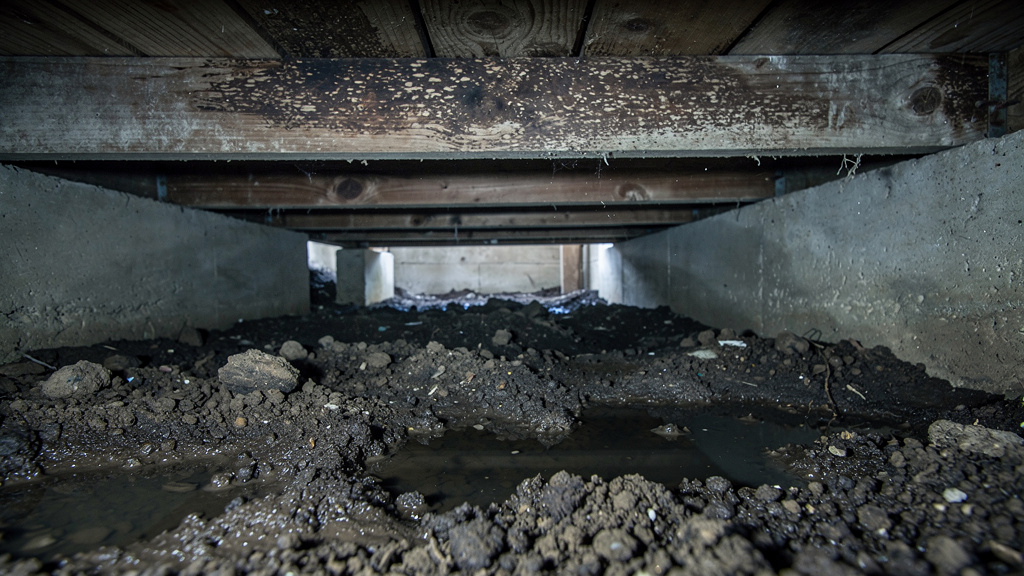
Yes, crawl spaces can cause significant health problems for Charlotte families, including respiratory issues, allergic reactions, and radon exposure that affects up to 40% of your home’s indoor air according to the EPA’s understanding of the stack effect (Source: EPA Indoor Air Quality).
Why Charlotte’s Climate Creates Crawl Space Health Risks
Charlotte’s humid subtropical climate creates perfect conditions for crawl space health hazards. The city averages 67% annual humidity, which promotes mold growth in traditional vented crawl spaces. Charlotte sits in the Piedmont region where heavy clay soil holds moisture against home foundations, increasing water intrusion risks.
Most Charlotte homes were built with vented crawl spaces that actually worsen moisture problems. During warm, humid summers, outdoor air enters through foundation vents and hits cooler surfaces, causing condensation. This moisture creates ideal breeding grounds for mold, bacteria, and other contaminants that migrate upward into your living space through a phenomenon called the stack effect.
The World Health Organization states that occupants of damp buildings have 50-100% increased risk of respiratory symptoms and asthma (Source: WHO Guidelines for Indoor Air Quality: Dampness and Mould). With up to 40% of your first floor’s air originating in the crawl space, contaminated air directly impacts your family’s health (Source: EPA Indoor Air Quality).
What Specific Health Problems Do Charlotte Crawl Spaces Cause?
Contaminated crawl spaces trigger respiratory issues, allergic reactions, and increase cancer risks through multiple pathways.
Mold exposure causes the most immediate health problems. A study of 238 North Carolina homes found 19% demonstrated mold transmission from crawl spaces to living areas through HVAC systems (Source: PubMed/National Library of Medicine). Common symptoms include persistent coughing, wheezing, throat irritation, and worsening asthma. Children are especially vulnerable because they spend more time at home and breathe faster than adults.
Radon poses the most serious long-term threat. Charlotte area radon levels frequently exceed the EPA’s 4.0 pCi/L action level requiring mitigation (Source: RadonResources). This colorless, odorless gas causes an estimated 450 deaths annually in North Carolina according to the EPA’s radon statistics, making it the leading cause of lung cancer among non-smokers (Source: EPA Radon Health Risks). Homes with crawl spaces are especially susceptible to radon accumulation in the Charlotte Metro area (Source: RadonResources).
How Do You Know If Your Crawl Space Is Making You Sick?
Several warning signs indicate your crawl space may be impacting your family’s health.
Indoor air quality problems often manifest as persistent respiratory symptoms that worsen at home. Watch for family members experiencing unexplained coughing, sneezing, or congestion that improves when away from home. Musty odors throughout your house signal active mold growth below. Increased allergy symptoms, especially during Charlotte’s humid summer months, often trace back to crawl space contamination.
Physical signs in your home provide additional clues. Soft or squeaky floors above the crawl space indicate moisture damage to floor joists. Visible mold on baseboards or lower walls suggests moisture migration from below. High indoor humidity above 60% creates uncomfortable conditions and promotes continued mold growth throughout your home. If your air conditioning runs constantly but your home feels muggy, crawl space moisture may be the culprit.
You should test for radon regardless of symptoms since it’s undetectable without specialized equipment. With 77 of 100 North Carolina counties showing radon levels above EPA action levels, testing is essential for Charlotte families (Source: North Carolina Department of Health and Human Services).
What Makes Charlotte Crawl Spaces Particularly Unhealthy?
Charlotte’s unique combination of climate, soil conditions, and traditional construction methods creates especially problematic crawl spaces.
The region’s clay-heavy soil retains moisture and causes foundation settling that creates cracks allowing water and gas intrusion. Properly sealed crawl spaces maintain significantly lower humidity than traditional vented designs, reducing mold growth conditions. Since mold cannot grow below 60% humidity but becomes inevitable above it, most Charlotte vented crawl spaces harbor mold colonies.
Traditional vented crawl space design worsens problems during Charlotte’s hot, humid summers. Warm outdoor air enters through foundation vents and condenses on cooler surfaces, creating persistent moisture. This contradicts the original theory that vents would keep crawl spaces dry. Instead, they import humidity and create temperature differentials that promote condensation.
Charlotte’s year-round moisture problems require robust solutions beyond simple ventilation. High humidity attracts pests and increases air conditioning costs by making homes feel warmer and requiring more cooling.
How Much Does It Cost to Fix Health Problems from Crawl Spaces?
Addressing crawl space health issues requires comprehensive solutions with costs varying based problem severity.
Basic health improvements start with moisture control measures ranging from $1,500-$3,000 for floor vapor barriers. However, complete health protection requires full encapsulation costing $3,500-$7,000 for average Charlotte homes according to local contractor surveys (Source: Carolina Duct & Crawl). Complex situations requiring mold remediation, structural repairs, and drainage systems can reach $13,000-$20,000 (Source: GSM Services).
Radon mitigation adds $800-$2,000 to project costs but reduces levels by 90% or more (Source: RadonResources). Pre-existing mold remediation costs $1,500-$5,000 depending on extent before encapsulation can begin (Source: Carolina Duct & Crawl). French drains necessary in Charlotte’s clay soil conditions add $4,000-$8,000 to comprehensive solutions.
| Health Issue | Solution | Cost Range |
|---|---|---|
| Mold Exposure | Remediation + Encapsulation | $5,000 – $12,000 |
| High Humidity | Dehumidifier + Sealing | $2,500 – $4,500 |
| Radon Gas | Mitigation System | $800 – $2,000 |
| Structural Damage | Sister Joists + Encapsulation | $100 – $300 per joist |
| Standing Water | French Drain + Sump Pump | $4,500 – $9,500 |
When Should You Call a Professional About Crawl Space Health Issues?
Professional assessment becomes essential when health symptoms persist or you discover visible contamination.
Immediate professional inspection is warranted if family members experience worsening respiratory symptoms at home, especially children or elderly residents. Don’t attempt DIY solutions when you discover visible mold growth, standing water, or structural damage in your crawl space. These conditions require specialized equipment and expertise to address safely without spreading contamination.
Licensed professionals understand the complex relationship between moisture, mold, radon, and indoor air quality. They can identify hidden problems like compromised vapor barriers, inadequate drainage, or HVAC system contamination that spread health hazards throughout your home. Professional-grade dehumidifiers and proper encapsulation techniques create the controlled environment necessary to eliminate health risks permanently.
Testing for radon requires certified professionals since proper measurement protocols ensure accurate results. Charlotte’s variable radon levels mean DIY test kits may miss dangerous concentrations that professional continuous monitoring would detect.
What Should Charlotte Homeowners Do Next?
Start with professional crawl space inspection and radon testing to identify specific health risks affecting your family.
Schedule inspections with at least three licensed contractors who understand Charlotte’s unique soil and climate challenges. Request comprehensive assessments including moisture measurements, structural evaluation, and indoor air quality testing. Many contractors offer free initial inspections, but invest in detailed testing if health symptoms are present.
Test for radon immediately since this invisible threat requires specialized detection equipment. Professional radon testing costs $150-$300 but provides accurate measurement of your family’s cancer risk. Don’t delay if you notice persistent respiratory symptoms, musty odors, or visible mold growth.
Address urgent health hazards first, then plan comprehensive solutions. Standing water, active mold growth, or structural damage require immediate attention to prevent worsening health impacts. Consider temporary measures like portable dehumidifiers while planning permanent solutions to protect your family’s health.
FAQ
Q: How quickly can crawl space problems affect my health?
Mold exposure symptoms can appear within hours, while radon health effects develop over years.
Q: Are crawl space health problems worse for children?
Yes, children are more vulnerable due to developing respiratory systems and more time spent at home.
Q: Can air purifiers help with crawl space contamination?
Air purifiers treat symptoms, not the source. Crawl space remediation is the only permanent solution.
Q: How often should I test for radon in Charlotte?
Test every 2 years or after any foundation work, including crawl space modifications.
Q: Will homeowners insurance cover health-related crawl space repairs?
Rarely, unless sudden water damage caused the contamination. Most policies exclude gradual moisture problems.
Sources
- EPA Indoor Air Quality: Introduction to Indoor Air Quality
- WHO Guidelines for Indoor Air Quality: Dampness and Mould
- EPA Radon Health Risks: Health Risk of Radon
- PubMed/National Library of Medicine: Crawl spaces as reservoirs for transmission of mold to the livable part of the home environment
- JLB Foundation and Waterproofing: Is Your Crawlspace Making You Sick
- North Carolina Department of Health and Human Services: North Carolina Radon Program
- RadonResources: Charlotte, NC Radon Mitigation & Testing
- RadonResources: Charlotte Metro, NC Radon Data & Mitigation Services
- Carolina Duct & Crawl: Charlotte Crawlspace & Basement Waterproofing Pros
- GSM Services: Crawlspace Encapsulation Cost
- Crawl Space Brothers: Addressing High Humidity In Charlotte With Solutions
CrawlClear helps Charlotte families identify and resolve crawl space health hazards through their network of certified contractors. Their professionals provide comprehensive inspections, radon testing, and customized solutions to protect your family’s health while addressing Charlotte’s unique moisture and soil challenges.