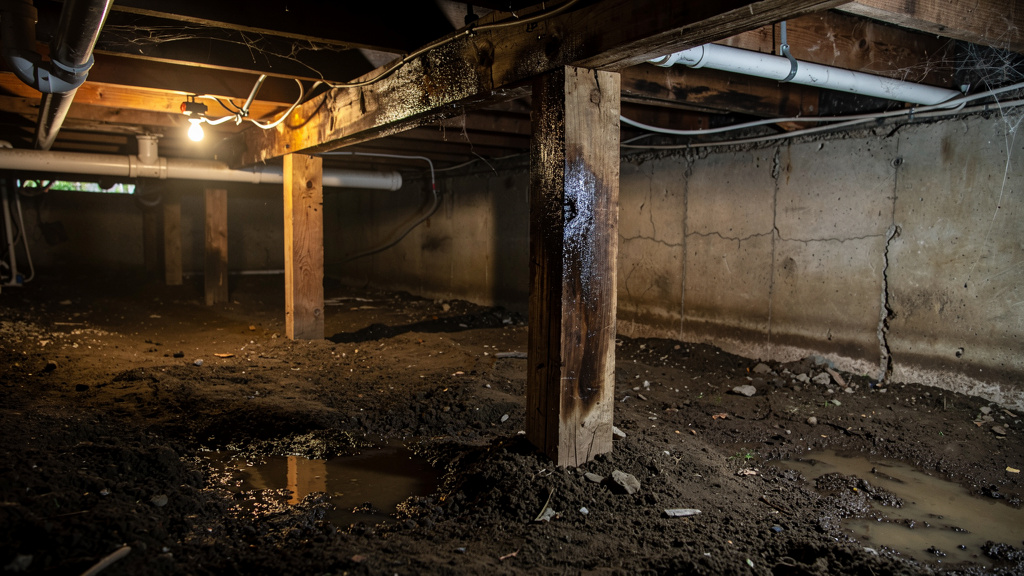
Crawl space mold signs in Charlotte include musty odors, visible growth on wood surfaces, increased allergy symptoms, and sagging floors caused by moisture damage.
Why Charlotte’s Climate Creates Perfect Mold Conditions
Charlotte’s humid subtropical climate makes crawl space mold almost inevitable without proper moisture control. The city averages 67% annual humidity, creating ideal conditions for mold growth in crawl spaces (Source: Dry Pro Foundation & Crawlspace Specialists). Charlotte’s heavy summer rainfall and clay soil compound the problem by trapping moisture against home foundations.
Mold needs three conditions to thrive: humidity, organic material, and temperatures between 60-80°F (Source: Structural Works Group). Charlotte crawl spaces provide all three year-round. Most local homes were built with traditional vented crawl spaces, which actually worsen moisture problems. During humid summers, outdoor air enters through foundation vents and hits cooler crawl space surfaces, causing condensation that feeds mold growth.
North Carolina’s building requirements recognize this challenge. The state now requires mechanical drying capability in closed crawl spaces to control moisture levels (Source: North Carolina Residential Code Section R408.3). However, thousands of Charlotte homes still have older vented systems that create ongoing mold risks.
What Does Crawl Space Mold Smell Like?
The distinctive musty, earthy odor is often the first sign homeowners notice of crawl space mold problems.
Persistent musty odors are a telltale sign of crawl space moisture problems (Source: Structural Works Group). This smell differs from temporary dampness after rain — it lingers and often worsens during humid weather. The odor typically becomes noticeable upstairs because 40-60% of indoor air comes from below your home through natural air circulation patterns.
Many Charlotte homeowners initially dismiss musty smells as “normal” for older homes. However, any sustained odor indicates active moisture problems that require attention. The smell often intensifies near HVAC returns, bathrooms, or areas directly above the crawl space. Some describe it as smelling like wet cardboard, damp earth, or rotting leaves. Generally, there’s no need for mold testing — fix the moisture source instead (Source: North Carolina State Extension).
What Visual Signs Should Charlotte Homeowners Watch For?
Visible mold appears as dark patches, discoloration, or fuzzy growth on wood surfaces, insulation, or vapor barriers.
Visible mold or mildew growth on wood beams or insulation indicates excessive moisture (Source: Structural Works Group). Mold typically appears as black, gray, or green blotches on wood surfaces (Source: homeyou). Look for dark staining on floor joists, subflooring, or foundation walls. White, chalky deposits on masonry walls indicate mineral efflorescence from moisture intrusion.
Inspect areas around plumbing penetrations, HVAC ducts, and exterior wall corners where moisture commonly accumulates. Use a flashlight to examine all wood surfaces, paying attention to areas that feel soft or show discoloration. High moisture weakens wooden joists, causing floors to sag or feel bouncy (Source: Structural Works Group). If you notice sagging floors above your crawl space, moisture damage may already be extensive and require professional crawl space moisture control measures.
What Health Symptoms Indicate Crawl Space Mold Exposure?
Increased allergy symptoms, respiratory issues, and unexplained headaches can signal mold exposure from your crawl space.
Increased sneezing or allergy symptoms may indicate presence of fungal growth in the crawl space (Source: Noosa Pest). Mold exposure can cause respiratory issues, allergies, skin irritation, and headaches (Source: Sedona Waterproofing Solutions). These symptoms often worsen during humid weather when mold spores become more active.
Pay attention to symptoms that improve when you’re away from home but return quickly after coming back. Family members with asthma or existing allergies typically notice symptoms first. Some people experience persistent coughing, throat irritation, or nasal congestion that doesn’t respond to typical allergy treatments. Children and elderly family members are often most sensitive to mold exposure effects. However, not everyone reacts to mold exposure, so the absence of symptoms doesn’t mean your crawl space is mold-free.
How Can You Tell If Moisture Levels Are Too High?
Relative humidity above 60% in your crawl space creates conditions for rapid mold growth and structural damage.
The EPA recommends keeping indoor humidity below 60%, ideally between 30-50% relative humidity (Source: U.S. Environmental Protection Agency). Use a digital hygrometer to measure crawl space humidity levels. Many fungi grow well at temperatures between 60-80°F (Source: North Carolina Department of Health and Human Services), which describes Charlotte crawl spaces year-round.
Look for condensation on metal surfaces, pipes, or HVAC ducts during humid weather. Water droplets on cool surfaces indicate humidity levels are too high for the temperature. Check for standing water after heavy rains, which Charlotte experiences frequently during summer months (Source: Dry Pro Foundation & Crawlspace Specialists). Even small amounts of standing water can dramatically increase humidity levels throughout the space. Temperature gradients between outside air and crawl space surfaces produce the moisture needed for mold growth (Source: North Carolina Department of Health and Human Services).
When Should You Schedule Professional Mold Inspection?
Professional mold inspection becomes necessary when you notice multiple warning signs or experience persistent health symptoms.
Schedule professional inspection if you detect musty odors lasting more than a few days after rain, see visible growth on wood surfaces, or notice increased allergy symptoms that coincide with time spent at home. Crawl space inspections should be performed at least twice yearly — spring and fall (Source: Sedona Waterproofing Solutions). Spring inspections are particularly important after winter freeze-thaw cycles that can create new moisture entry points.
Professional inspectors have moisture meters, infrared cameras, and experience identifying problem areas that untrained eyes miss. Mold inspection costs in Charlotte range from $249-$387, with an average of $284-$353 (Source: HomeAdvisor Charlotte Market Data). However, many contractors offer free inspections when considering crawl space encapsulation work. Act quickly when excess moisture is found — water damage should be dried within 24-48 hours to prevent mold growth (Source: U.S. Environmental Protection Agency).
| Warning Sign | Immediate Action | Professional Help Needed |
|---|---|---|
| Musty odor lasting 3+ days | Check for standing water, improve ventilation | Yes, if odor persists |
| Visible mold on wood surfaces | Don’t disturb growth, document with photos | Yes, immediately |
| Sagging floors above crawl space | Avoid walking on affected areas | Yes, structural assessment |
| Standing water after rain | Remove water source, dry within 24-48 hours | Yes, for drainage solutions |
| Persistent allergy symptoms | Monitor correlation with home occupancy | Yes, for air quality testing |
What Should Charlotte Homeowners Do If They Find Mold?
Don’t disturb visible mold growth — this can release spores throughout your home and worsen contamination.
Document mold locations with photos but avoid touching or scraping growth. Sampling for mold should be conducted by professionals (Source: U.S. Environmental Protection Agency). Turn off HVAC systems that draw air from the crawl space to prevent spore circulation. If possible, seal crawl space access points temporarily until professional assessment.
Address the moisture source immediately. Remove standing water, fix plumbing leaks, and improve ventilation if safe to do so. Many Charlotte homes need comprehensive solutions including vapor barriers, drainage systems, and dehumidifiers to prevent mold return. Consider temporary dehumidifier rental while planning permanent fixes. Mold remediation typically takes 1-3 days depending on severity (Source: Sedona Waterproofing Solutions).
For extensive mold growth or crawl space flooding situations, professional remediation ensures safe removal and prevents cross-contamination to living spaces above.
FAQ
Q: Can I remove crawl space mold myself?
Small areas (less than 10 square feet) can be DIY cleaned, but larger growth requires professional remediation.
Q: How quickly does crawl space mold grow in Charlotte’s climate?
Mold can begin growing within 24-48 hours after moisture exposure in Charlotte’s humidity.
Q: Will dehumidifiers prevent crawl space mold?
Yes, maintaining humidity below 60% prevents most mold growth when combined with proper moisture barriers.
Q: Does crawl space mold always smell musty?
Not always — some mold types produce little odor, making visual inspection important.
Q: How much does mold remediation cost in Charlotte?
Professional mold remediation typically costs $1,500-$5,000 depending on extent and access difficulty.
Sources
- North Carolina Department of Health and Human Services: Mold and Human Health Guide
- U.S. Environmental Protection Agency: Brief Guide to Mold, Moisture and Your Home
- Dry Pro Foundation & Crawlspace Specialists: Mold in Crawl Space North Carolina
- Structural Works Group: Crawlspace Remediation
- Noosa Pest: Crawl Space Encapsulation Charlotte
- Sedona Waterproofing Solutions: Mold Remediation
- North Carolina State Extension: Mold and Moisture Checklist
- homeyou: Mold Inspection Cost in Charlotte, NC
- North Carolina Residential Code Section R408.3
- HomeAdvisor Charlotte Market Data
CrawlClear helps Charlotte homeowners identify qualified mold remediation specialists who understand local moisture challenges and building codes. Their network of licensed professionals provides thorough inspections and comprehensive solutions to address both mold growth and underlying moisture problems that cause recurring issues.