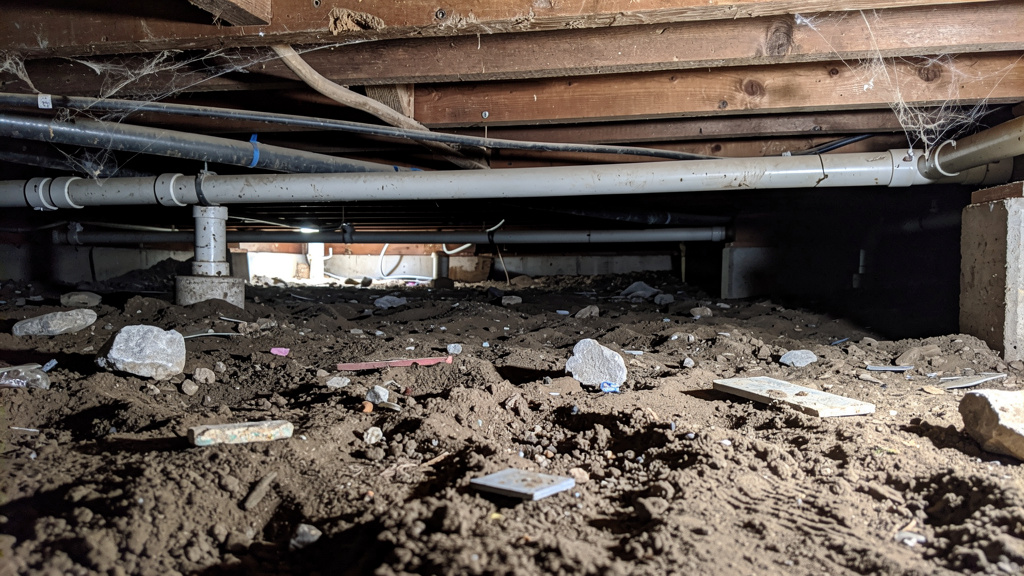
Musty crawl space odors in Charlotte result from high humidity, mold growth, and moisture trapped by clay soil conditions.
Why Charlotte’s Climate Creates Musty Crawl Space Problems
Charlotte’s humid subtropical climate creates ideal conditions for persistent crawl space odors. The city averages 67% annual humidity, well above the EPA’s recommended maximum of 60% for indoor spaces (Source: Dry Pro Foundation and Crawlspace Specialists). This excess moisture feeds mold growth and wood decay that produces characteristic musty smells.
Most North Carolina homes experience mold growth in crawl spaces due to the state’s humid climate and construction patterns (Source: North Carolina State University Extension, Building and Home Maintenance). Charlotte sits in the Piedmont region where heavy red clay soil holds moisture against foundation walls, creating continuous dampness problems. Unlike sandy soils that drain quickly, clay creates a moisture barrier that keeps water near your home’s foundation.
North Carolina’s temperature fluctuations worsen moisture problems through continuous condensation cycles (Source: U.S. Environmental Protection Agency). When warm, humid air enters through foundation vents and hits cooler crawl space surfaces, moisture condenses on wood and concrete surfaces. This cycle repeats daily throughout Charlotte’s long, humid summers, creating perfect breeding conditions for odor-causing mold and bacteria.
What Causes That Distinctive Musty Smell?
The musty odor comes from mold and mildew releasing volatile organic compounds as they feed on organic materials in your crawl space.
Mold produces allergens, irritants, and potentially toxic substances that create the characteristic musty smell (Source: U.S. Environmental Protection Agency). When humidity exceeds 60%, crawl spaces become breeding grounds for mold growth, wood rot, and pest infestations (Source: Tar Heel Basement Systems). The smell intensifies because up to 50% of your indoor air comes from the crawl space through natural air circulation patterns (Source: Building Science Corporation, Crawlspaces).
Wood rot fungi also contribute to musty odors as they break down cellulose in floor joists and subflooring. These organisms thrive in Charlotte’s consistently damp conditions, particularly when bare earth floors provide unlimited moisture supply. Decaying organic matter like leaves, cardboard, or wood debris creates additional odor sources. Standing water in low spots creates anaerobic conditions that produce particularly strong sulfur-like smells.
How Does Charlotte’s Soil Make Moisture Problems Worse?
Charlotte’s clay-heavy soil acts like a sponge, holding moisture against your foundation and preventing proper drainage around your home.
Clay soil composition affects foundation stability through expansion and contraction cycles that create moisture intrusion points (Source: U.S. Environmental Protection Agency). Charlotte’s humid climate makes crawl spaces prime for condensation problems because moisture from the soil continuously evaporates into the crawl space air. Traditional vented crawl spaces actually worsen the problem by allowing humid outdoor air to enter and condense on cool surfaces.
Poor drainage compounds the issue when Charlotte receives its average 43 inches of annual rainfall. Water pools around foundations instead of draining away, creating hydrostatic pressure that forces moisture through concrete and masonry walls. This constant moisture supply feeds the biological processes that create persistent musty odors. Many Charlotte homes need drainage systems to redirect water away from foundations before encapsulation can solve odor problems permanently.
Why Don’t Foundation Vents Stop Musty Smells?
Foundation vents actually make musty odors worse in Charlotte’s humid climate by bringing in moisture-laden air that condenses inside the crawl space.
Traditional building codes required crawl space vents based on the theory that airflow would keep spaces dry. However, this approach fails in humid climates like Charlotte’s. When outdoor air with 67% humidity enters through vents and hits cooler crawl space surfaces, moisture condenses and creates perfect conditions for mold growth (Source: Dry Pro Foundation and Crawlspace Specialists).
The American Lung Association recommends keeping indoor humidity below 50% and identifies crawl spaces as common problem areas for moisture-related health issues (Source: American Lung Association). Vented crawl spaces in Charlotte typically maintain humidity levels of 70-80% during summer months, well above safe thresholds. Sealing these vents and properly conditioning the space eliminates the moisture source that feeds odor-causing organisms.
When Should I Call a Professional About Crawl Space Odors?
Call a professional immediately if you notice musty odors accompanied by visible mold, soft spots in floors above the crawl space, or respiratory symptoms that worsen at home.
Professional assessment is critical because musty odors indicate active moisture problems that worsen over time. What starts as a minor smell can lead to structural damage, indoor air quality problems, and expensive repairs if left untreated. Wet materials should be dried within 24-48 hours to prevent mold growth, but established odor problems require systematic moisture control (Source: U.S. Environmental Protection Agency).
Licensed professionals can identify moisture sources, assess structural damage, and design comprehensive solutions. They understand North Carolina’s building code requirements, including the mandatory 6-mil polyethylene vapor retarder for exposed earth surfaces (Source: Stetten Home Services). Most importantly, they can determine whether crawl space encapsulation or other moisture control measures are needed to eliminate odors permanently.
What Should Charlotte Homeowners Do About Musty Crawl Space Smells?
Start with a professional crawl space inspection to identify moisture sources and develop a comprehensive treatment plan tailored to your specific conditions.
Don’t ignore musty odors or try to mask them with fans or deodorizers. These approaches don’t address the underlying moisture problems and can actually spread contaminated air throughout your home. Crawl spaces with high relative humidity are common sites of hidden mold growth, particularly those with bare earth floors (Source: U.S. Environmental Protection Agency).
Schedule inspections during spring when moisture problems are most visible after winter freeze-thaw cycles. Get quotes from at least three licensed contractors who understand Charlotte’s unique soil and climate challenges. Ask specifically about moisture control solutions and whether your situation requires drainage improvements before encapsulation. Address standing water issues immediately, as these create the most severe odor problems and indicate flooding risks that require urgent attention.
| Warning Sign | Immediate Action Required | Professional Assessment Needed |
|---|---|---|
| Strong musty odor | Investigate moisture source | Yes – within 1 week |
| Visible mold growth | Stop using space, ventilate | Yes – within 24 hours |
| Standing water | Remove water, run fans | Yes – same day |
| Soft floor spots | Avoid walking on area | Yes – within 24 hours |
| Respiratory symptoms | Leave area, seek medical care | Yes – same day |
FAQ
Q: Can I eliminate crawl space odors by running a fan?
No, fans don’t remove moisture sources and may spread contaminated air upward.
Q: How long does it take to eliminate musty crawl space odors?
1-3 weeks after moisture control measures are properly installed and operating.
Q: Will dehumidifiers alone stop crawl space smells in Charlotte?
Not without vapor barriers and air sealing to control moisture sources first.
Q: Are musty crawl space odors dangerous to my family’s health?
Yes, mold exposure can trigger allergic reactions and respiratory problems.
Q: How much does it cost to fix musty crawl space odors?
$3,500-$15,000 depending on moisture control measures and repairs needed (Source: HomeAdvisor Crawl Space Repair Costs).
Sources
- U.S. Environmental Protection Agency: A Brief Guide to Mold, Moisture and Your Home
- U.S. Environmental Protection Agency: Mold Course Chapter 2
- American Lung Association: Mold Guidelines
- Dry Pro Foundation and Crawlspace Specialists: Charlotte Crawl Space Humidity Average 67%
- Tar Heel Basement Systems: Humidity & Temperature Swings: NC Crawl Space Humidity Issues
- Structural Works Group: Crawl Space Moisture Problems in Charlotte: Warning Signs & Fixes
- Stetten Home Services: North Carolina Closed Crawl Space Building Code
- North Carolina State University Extension: Building and Home Maintenance
- Building Science Corporation: Crawlspaces
- HomeAdvisor: Crawl Space Repair Costs
CrawlClear helps Charlotte homeowners connect with experienced crawl space professionals who understand local moisture challenges. Their network of licensed contractors provides comprehensive inspections and proven solutions for eliminating persistent musty odors and preventing future moisture problems.